Print & Labelling Automation
Introduction
Manual labelling is slow and easy to get wrong. Someone prints a batch, peels each label, finds the right carton and sticks it on. Do that a few thousand times a shift and labels end up crooked, on the wrong box, or unreadable. The problem usually only shows up at the next scan point, or when a retailer or carrier rejects the delivery.
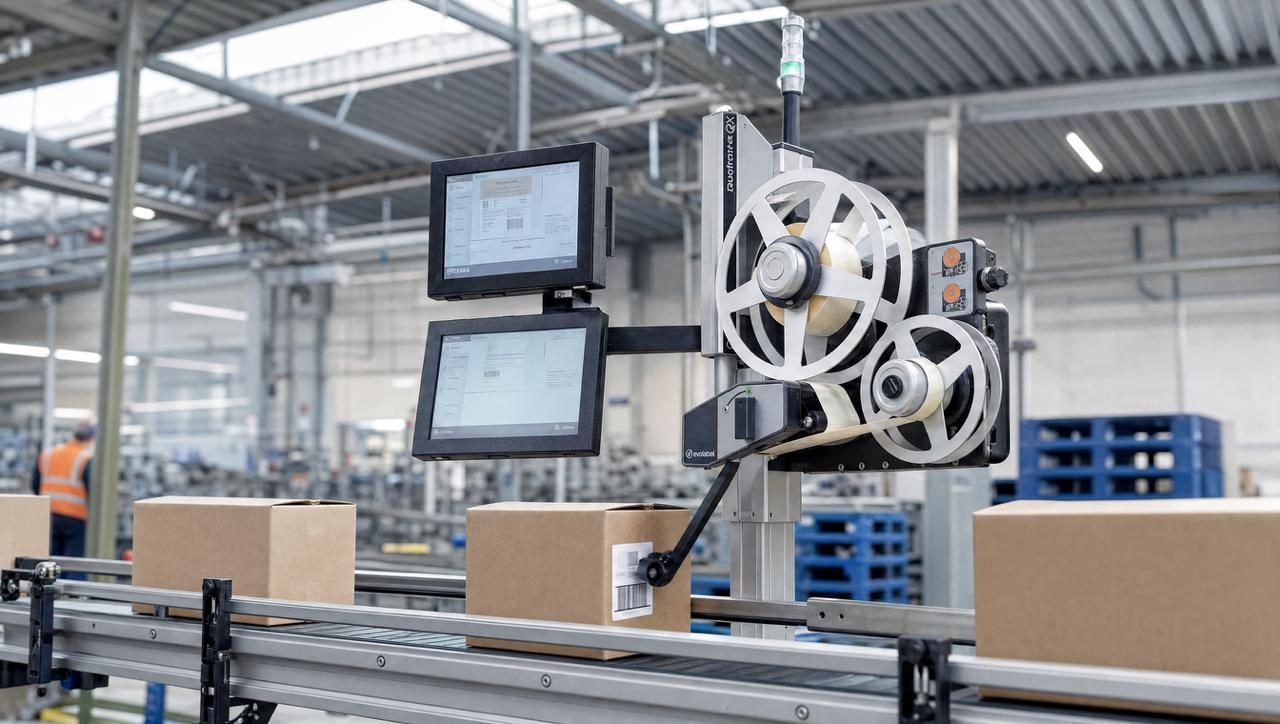
Print-and-apply automation removes those manual steps. Each label is printed on demand with that item’s live data, applied in the same position on every carton, parcel or pallet, then scanned to confirm it’s readable before the item moves on. Labelling becomes part of the line, not a separate job.
SAS specifies, installs and supports the right print-and-apply system for your products, label formats and line speed. We connect it to your WMS through SASCA, our warehouse control software, so it isn’t another standalone machine to manage.
Every label right, every time:
Print and apply labelling is an automated system that prints a label for each item as it passes along a conveyor and applies it straight away, with no manual handling. The label data, such as the address, carrier barcode or pallet SSCC, comes from your warehouse system in real time. A barcode scanner then checks every label before the item continues.
Every labelling project starts with your labels, your products and your line speed, not a catalogue. We match the printer, applicator and scanner to your operation, then integrate and support it locally.
We review your label formats, carrier and customer requirements, product and packaging range, and line speeds. We then choose the right printer, application method and label position for each item.
We install the system on your conveyor or pack line and connect it to your WMS through SASCA, so every label prints with the right data at the right moment. We then test it against your real orders and packaging.
We train your operators on label changes, consumables and basic maintenance, and provide local support after go-live. As your volumes or label requirements change, we update the system to match.
Products
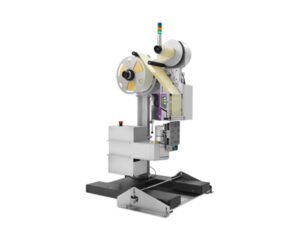
Applies compliant, scan-ready labels at over 150 packs per minute, with changeovers under 40 seconds.
Learn More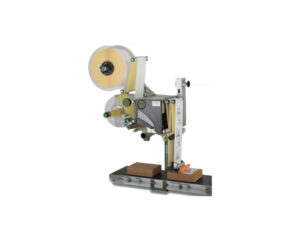
Applies labels at up to 50 metres per minute, without sacrificing accuracy or line uptime
Learn MoreIs your line ready for print and apply?
Your WMS or ERP needs to supply the label data for each item, such as the address, carrier barcode or SSCC. SASCA connects the printer to your system, so you don't need to replace what already works.
Labels apply best to flat, clean surfaces in a predictable position. We review your carton and bag range to choose the right application method and label position.
The printer needs room beside the conveyor, and items need enough gap between them to be labelled and scanned. We design both into the layout.
Questions & answers
A print and apply labeller is a machine that prints a label for each item on demand and applies it automatically as the item passes on a conveyor. It replaces manual printing and sticking, and is usually connected to the warehouse system so each label carries the right data.
Shipping and carrier labels, address labels, product labels, and GS1 logistic labels with SSCC barcodes for pallets. The label layout and data come from your WMS or ERP.
An SSCC (Serial Shipping Container Code) label is a GS1 standard barcode label that uniquely identifies a pallet or carton in the supply chain. Most major Australian retailers require SSCC labels on inbound pallets, and an automatic pallet labeller applies them consistently on the required sides.
A barcode reader such as the Cognex DataMan scans each label straight after it's applied. If a label is missing or unreadable, the item is diverted to an exception lane for correction before it ships.
Yes. SASCA, our warehouse control software, connects the labeller to your WMS or ERP, so each label prints with live order data. You don't need to replace your current system.
In most cases, yes. We assess your conveyor, line speed and spacing, then fit the labeller and scanner into the existing line.
Direct thermal labels need no ribbon and suit short-life shipping labels. Thermal transfer uses a ribbon and produces more durable labels for long storage, cold rooms or pallets exposed to handling. We'll recommend the right option for your products.